Cart
0
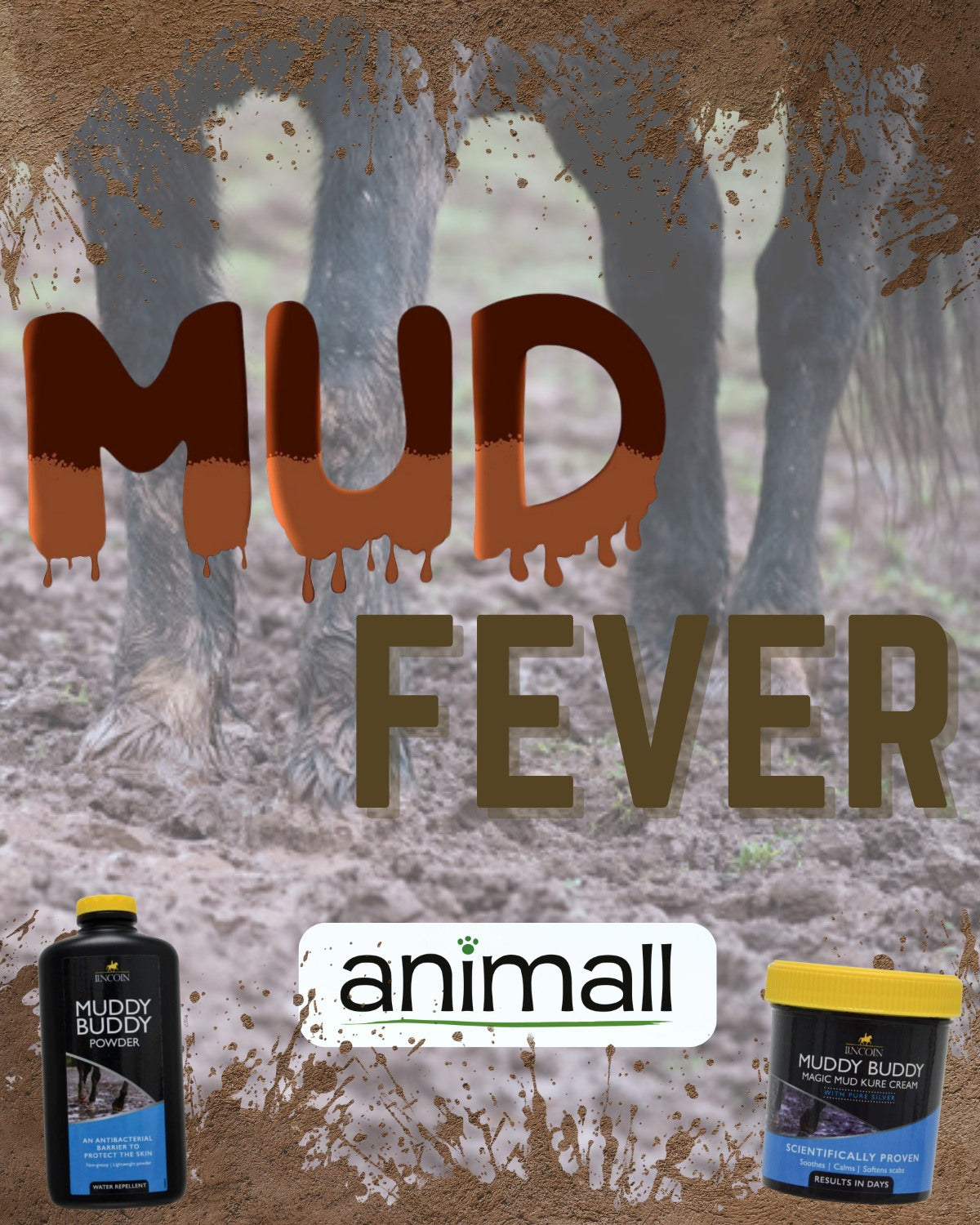
What It Is, How to Treat It and How to Prevent It
If your horse spends winter and early spring stood in muddy fields, you have probably worried about mud fever.
It is one of the most common seasonal skin conditions in horses across the UK. While it is frustrating, it is very manageable when caught early.
This guide explains what mud fever is, what signs to look for, and how to care for affected legs properly, along with ways to reduce the risk in muddy conditions.
What is mud fever?
Mud fever is a painful skin condition that affects the lower legs, most commonly around the heels and pasterns.
You may also hear it called greasy heel or pastern dermatitis.
It develops when prolonged exposure to wet and muddy ground softens the skin. Once the skin barrier is weakened, bacteria and fungi can enter and cause inflammation and infection.
Horses with white legs or feathering can be more prone, but any horse can be affected.
Mud fever is most common during wet winters and early spring when fields stay muddy for long periods.
Signs of mud fever to look out for
Mud fever can start mildly and worsen quickly if ignored.
Common signs include
• Red or sore skin around the heels or pasterns
• Matted hair or damp patches that do not dry easily
• Thick scabs or crusty areas
• Swelling or heat in the lower leg
• Sensitivity or pain when touched
• In more serious cases, stiffness or lameness
Catching mud fever early makes treatment much easier and more comfortable for your horse.
How to treat mud fever
Treatment depends on how severe the condition is, but the basics are always the same.
Clean gently.
Dry thoroughly.
Protect the skin.
Clean carefully
Wash the affected area with warm water and a mild antiseptic wash.
Avoid harsh scrubbing as this can damage the skin further and make the infection worse.
Soften and remove scabs
Soft scabs can be gently lifted away once they are loosened.
Never force dry scabs off as this can cause bleeding and spread infection.
A product like Net Tex Muddy Marvel De Scab can help here. Buy Here It is designed to soften and lift mud fever scabs so they can be removed without damaging healthy skin underneath.
This allows treatments to reach the affected area more effectively.
Dry completely
Drying is one of the most important steps.
Pat the area dry with a clean towel and make sure no moisture is trapped against the skin before applying any treatment.
Apply treatment or protection
Depending on the severity, this may be a barrier product or a medicated cream recommended by your vet.
If swelling, heat or lameness develops, veterinary advice should always be sought.
Preventing mud fever in muddy conditions
While mud fever cannot always be avoided, good management reduces the risk significantly.
• Avoid leaving horses standing in deep mud for long periods
• Improve high traffic areas like gateways with hard standing or woodchip
• Check legs daily during wet weather
• Avoid excessive washing as it removes natural oils
• Always dry legs thoroughly after turnout
For horses that are regularly turned out in muddy fields, prevention products can be very helpful.
Keratex Mud Shield Powder is designed to be applied to clean, dry legs before turnout. Buy here
It creates a breathable barrier that helps repel water and mud, reducing how much moisture sits against the skin.
This can be particularly useful during prolonged wet spells when keeping legs completely dry is difficult.
When to call the vet
Mud fever often responds well to early treatment at home, but veterinary advice should be sought if
• The leg becomes very swollen or hot
• Your horse is clearly lame or in pain
• The skin is oozing or not improving
• Mud fever keeps returning despite good management
Early intervention prevents the condition from becoming more serious and uncomfortable.
Final thoughts
Mud fever is common, especially in UK winters, but it does not have to become a major problem.
Regular checks, gentle care and the right products make a huge difference.
By keeping legs clean, dry and protected, and acting quickly at the first signs, you can help your horse stay comfortable no matter how muddy the fields get.