Quick answer: the RSPB now advises "Feed Seasonally, Feed Safely". From 1 November to 30 April you can put out seeds, sunflower hearts and peanuts as well as fat balls, suet and mealworms. From 1 May to 31 October, pause seeds and peanuts and offer only small amounts of mealworms, fat balls or suet. Clean and move your feeders every week.
Why the advice changed
An RSPB evidence review found that feeding garden birds can help spread trichomonosis, a parasite that the RSPB links to serious declines in greenfinches and chaffinches. The risk is highest in summer and autumn, which is why seeds and peanuts are now paused in the warmer months. The RSPB says its advice may change as new evidence comes in.
What to feed garden birds through the year
| Food |
1 Nov to 30 Apr |
1 May to 31 Oct |
| Sunflower hearts |
Yes |
Pause |
| Seed mixes |
Yes |
Pause |
| Nyger seed |
Yes |
Pause |
| Peanuts |
Yes |
Pause |
| Fat balls and suet |
Yes |
Small amounts |
| Mealworms |
Yes |
Small amounts |
Which feeder to use
- Sunflower hearts and seed mixes: a seed feeder, using mixes made for feeders.
- Nyger seed: a special nyger feeder, as the seeds are tiny.
- Peanuts: a rigid steel mesh nut feeder only.
- Fat balls and suet: a fat ball or suet feeder.
- Mealworms: a dish, or scattered on the ground, and eaten by dusk.
Which birds eat what?
-
Sunflower hearts are husk-free and rich in oil and protein. The RSPB says they are popular with lots of birds, including tits, finches and sparrows. In the British Trust for Ornithology's Goldfinch Feeding Survey, goldfinches preferred sunflower hearts to any other food, with nyger seed second.
-
Nyger seed is a tiny, oil-rich seed. The RSPB says it is a particular favourite of greenfinches, goldfinches, siskins and redpolls.
-
Peanuts are high in oil and protein. Buy good-quality peanuts and throw away any that look mouldy.
-
Fat balls and suet are high-energy foods for cold weather, and the RSPB says suet attracts a wide variety of birds.
How much food should I put out?
Feed in moderation and adjust the amount to how quickly it disappears. The RSPB says food should be eaten within these times:
- Seeds and peanuts: one to two days
- Mealworms: by dusk the same day, as hedgehogs may eat them after dark
- Suet products: up to seven days
Replace any uneaten food at least once a week, and keep food as dry as you can. In severe winter weather, the RSPB says you may need to feed twice a day.
How to keep feeders clean and safe
- Clean and move your feeders once a week, and clear up any food and droppings underneath.
- Don't hang feeders under branches or other places where birds perch, so droppings don't fall onto the food.
- The RSPB now advises against bird tables and other flat feeders, including window feeders.
- Choose feeders that come apart easily for cleaning, keep the rain out and drain well.
- Only scatter mealworms on the ground. Other foods are eaten more slowly and can attract rodents.
- Change the water in bird baths every day and clean the bath weekly.
What we stock
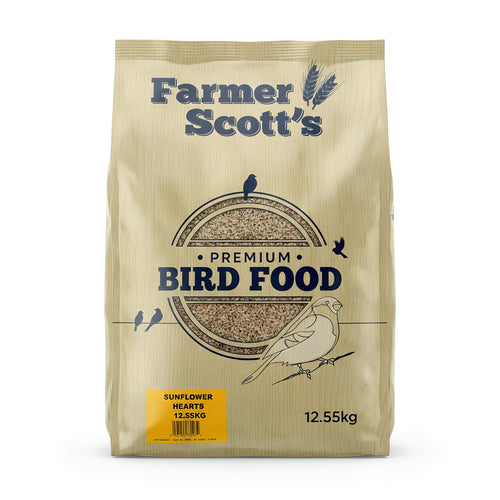
For winter feeding (November to April): Farmer Scott's Sunflower Hearts 2kg and 12.55kg, Peanuts 2kg and 12.55kg, Nyger Seed and Premium Seed Mix.
All year round, in small amounts: Farmer Scott's Fat Ball Tub, Henry Bell Fat Balls, Farmer Scott's Mealworm 1kg and Henry Bell Dried Mealworms.
See the full range in Wild Bird & Garden.
Frequently asked questions
Should I stop feeding birds in summer?
Not completely. The RSPB asks people to pause seeds and peanuts from 1 May to 31 October. Small amounts of mealworms, fat balls or suet are fine all year.
What is the best food for garden birds in winter?
Birds need high-energy, high-fat food in cold weather. From 1 November you can offer sunflower hearts, seed mixes, nyger and peanuts alongside fat balls, suet and mealworms.
Do I need a special feeder for peanuts?
Yes. The RSPB says a rigid steel mesh nut feeder is the only safe way to offer peanuts to wild birds.
Can I still use a bird table?
The RSPB currently advises against bird tables and other flat feeders, including window feeders, to help stop disease spreading. Hanging feeders that are easy to clean are the safer choice.
How often should I clean my bird feeders?
Once a week. Clean and move the feeders, clear up underneath them, and change bird bath water daily.
Are fat balls safe to put out all year?
Yes, in small amounts. The RSPB says fat balls, suet and mealworms can be offered year-round, and suet products should be eaten within seven days.
Written and reviewed by the Animall team, November 2026. Sources: RSPB (Feed Seasonally, Feed Safely guidance; Ask an RSPB Expert), British Trust for Ornithology (feeding garden birds; Goldfinch Feeding Survey).